Choosing the right perforated roller shutter
“Perforated roller shutter” covers several slat styles. Each one balances security, visibility, airflow, weight and price differently. Here is how they compare, followed by a closer look at each type. We supply and install every type below for industrial, commercial and residential clients across Gauteng.
| Type | Visibility | Airflow | Security | Best for |
|---|---|---|---|---|
| Perforated steel | Good | Good | High | Shops, warehouses, garages |
| Micro-perforated | Moderate | Moderate | Very high | Jewellers, pharmacies, privacy at home |
| Punched / brick-lattice | Excellent | Excellent | Medium–high | Mall shops, kiosks, counters |
| Polycarbonate vision | Excellent | Low | Medium–high | Premium shopfronts, patios |
| Aluminium perforated | Good | Good | Medium–high | Wide spans, motorised doors |
| Vision-slat industrial | Partial | Partial | High | Warehouses, loading bays |
1. Perforated steel roller shutters
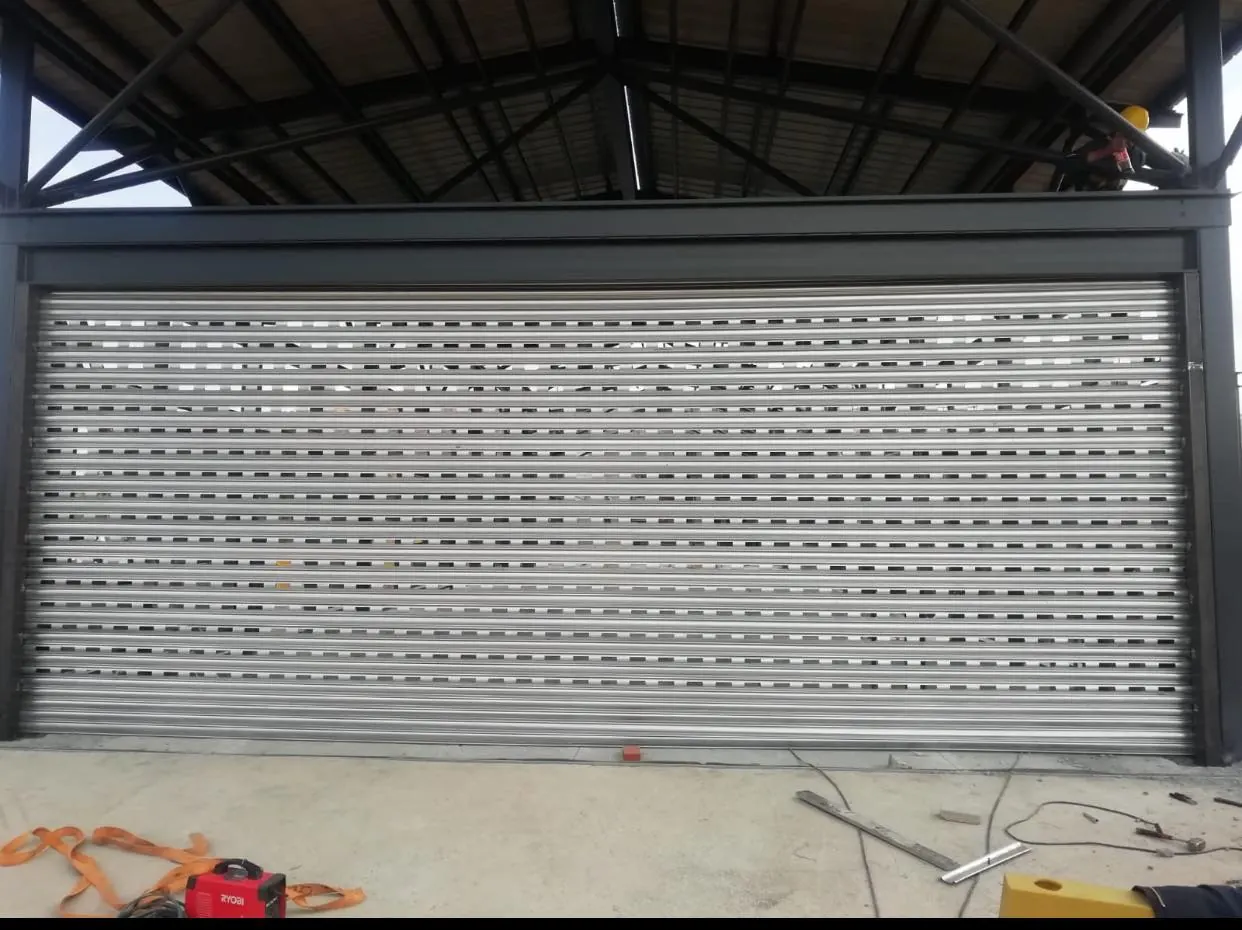
Galvanised steel slats punched with rows of small round holes. This is the most popular option because it combines the strength of a steel roller door with useful visibility and ventilation. Available galvanised or powder-coated.
2. Micro-perforated roller shutters
Much smaller holes that make the door look almost solid from a distance. When the inside is lit at night the shutter glows, so your display is still noticed. The tiny perforations make it very hard to pass objects or tools through, which suits high-value retail and homes that want privacy.
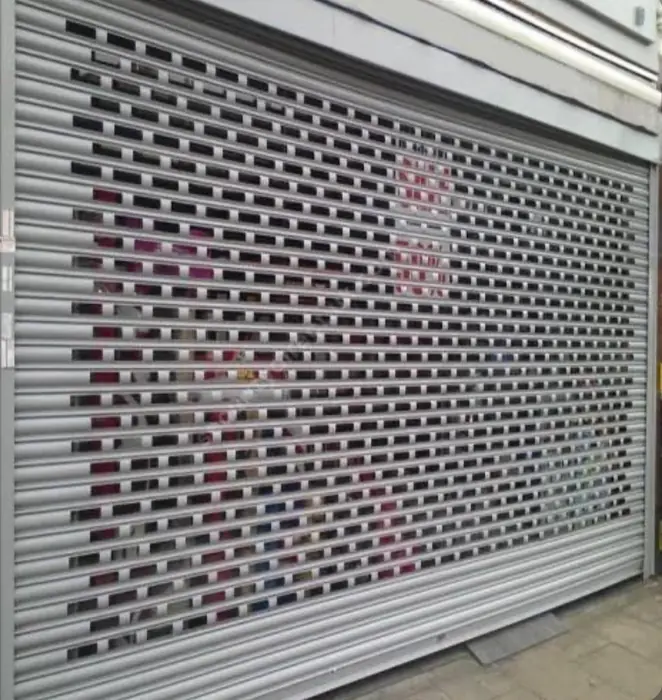
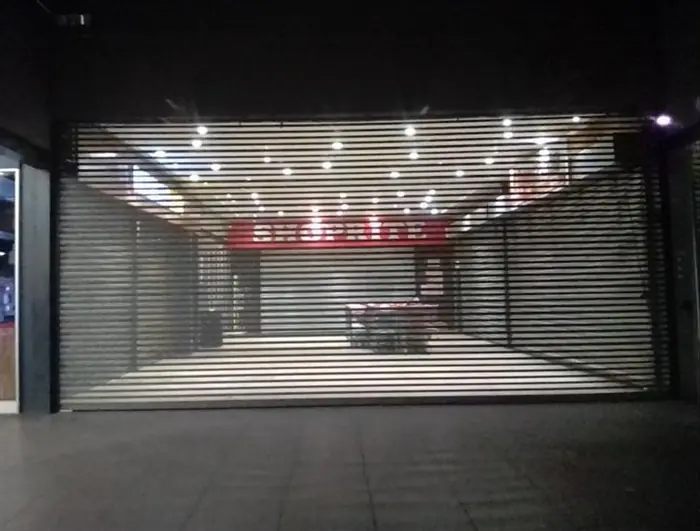
3. Punched / brick-lattice shutters
Instead of holes, these shutters use open links (often called brick-bond or lattice) for maximum see-through and airflow. They are common in malls, food courts and on service counters where the store wants to look open even when it is closed.
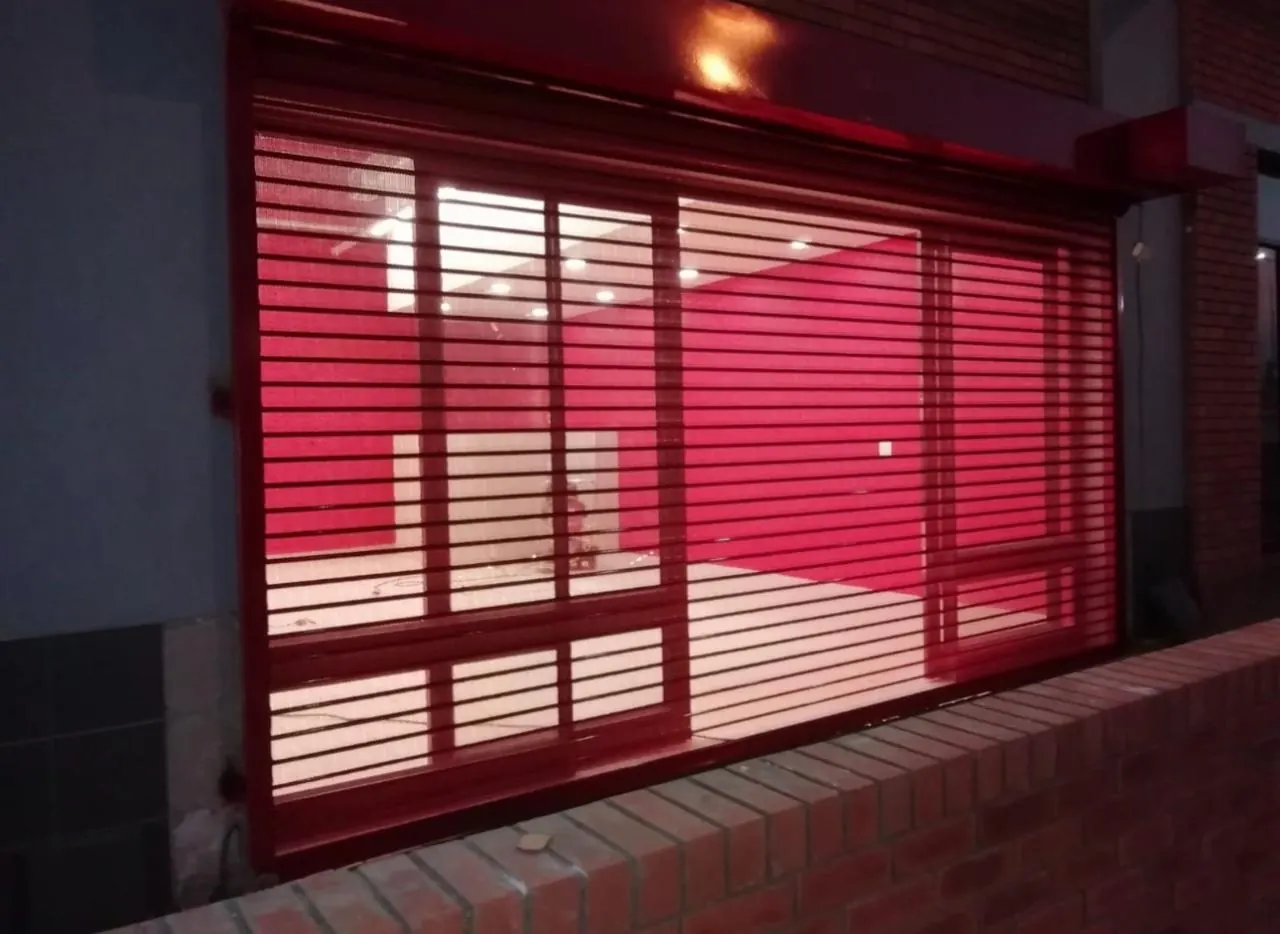
4. Polycarbonate vision / transparent shutters
Clear or tinted polycarbonate panels held in an aluminium frame create a near-transparent, modern finish. They are popular on premium shopfronts and residential entertainment areas. They let in plenty of light but little air.
5. Aluminium perforated shutters
Aluminium slats are lighter than steel, resist corrosion and are easy to motorise, making them suitable for wide openings and higher-end finishes. They can be perforated or combined with vision panels.
6. Vision-slat industrial doors
A practical hybrid: solid slats at the bottom for impact resistance and security, with perforated or vision slats higher up to let light and air in. Often used on warehouses, loading bays and workshops.
Operation: manual, chain or motorised
All types can be spring-assisted manual (push up / pull down), chain-gear operated for larger doors, or motorised with remotes and switches. See motorised roller shutter doors.
Finishes
Choose standard galvanised for a tough, economical finish, or powder-coating in a colour to suit your building. Guides, bottom rails and hood covers can be colour-matched.
Frequently asked questions
Which type of perforated shutter is the most secure?
Micro-perforated steel and heavier gauge perforated steel slats offer the highest security because the holes are small and the slats are strong. Combine them with good locks and a robust bottom rail.
Which type gives the best visibility?
Brick-lattice and polycarbonate vision shutters give the most see-through effect. Lattice also gives maximum airflow; polycarbonate gives a cleaner, glass-like look.
Are aluminium or steel shutters better?
Steel is stronger and usually more economical; aluminium is lighter, corrosion-resistant and easier to motorise on wide openings. We will advise on the best option for your opening.
Can I mix solid and perforated slats in one door?
Yes. Vision-slat doors use solid slats at the bottom and perforated slats higher up, and other combinations are possible.